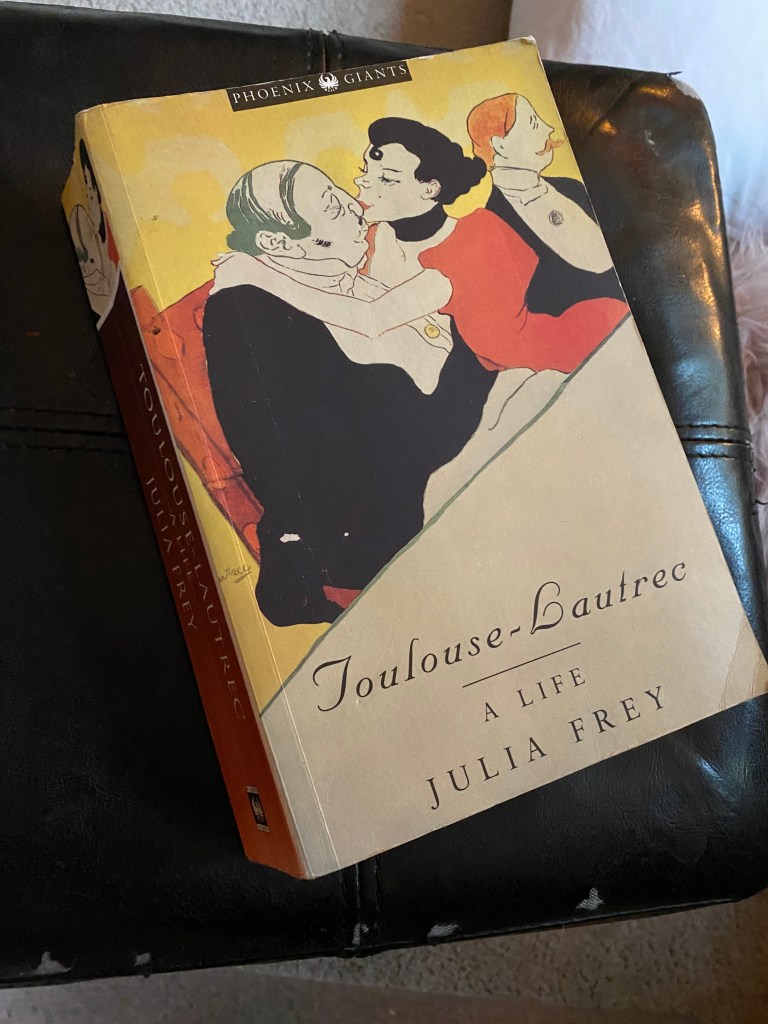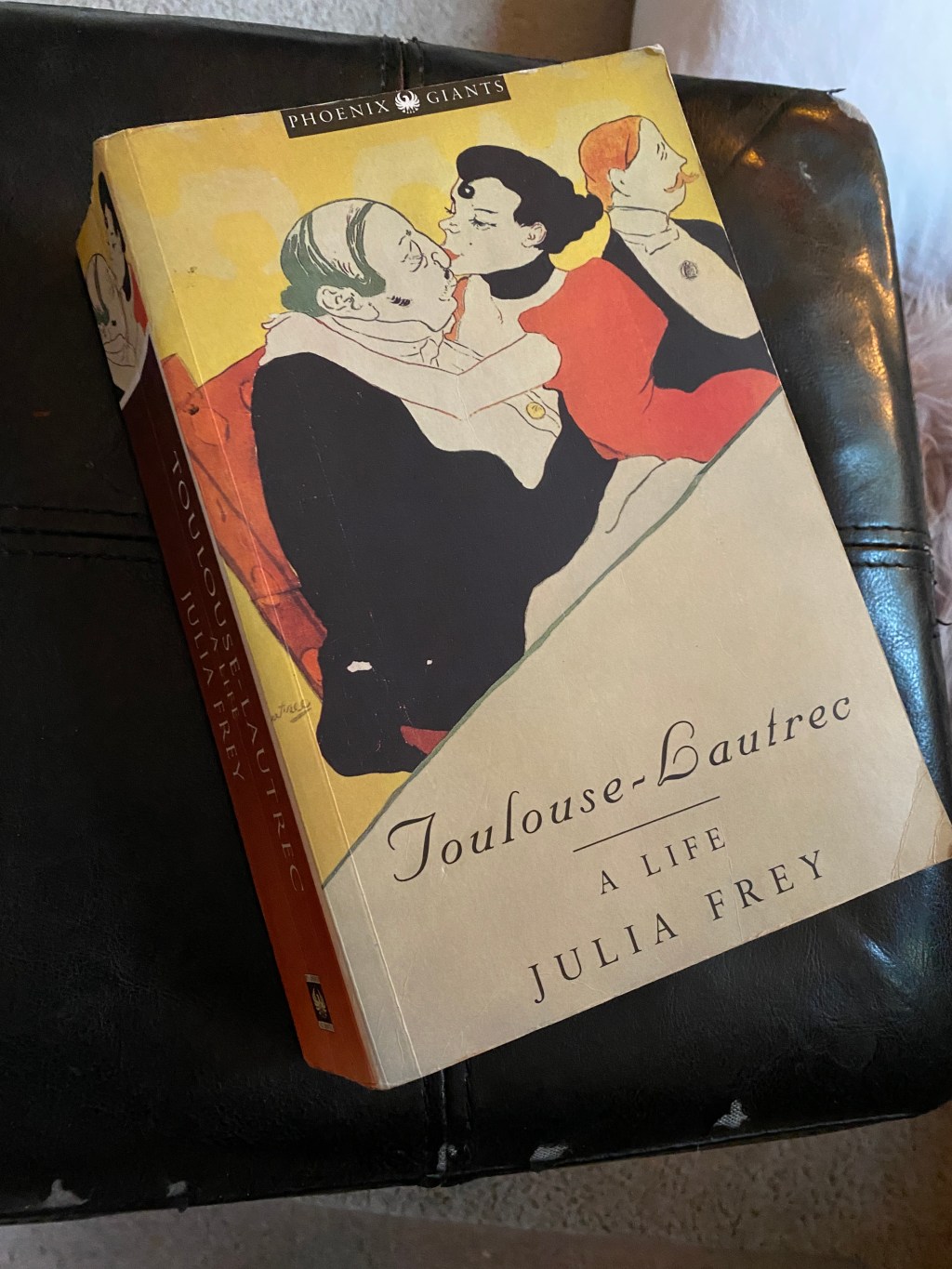
Toulouse-Lautrec: A Life by Julia Frey
Strolling through the Strand’s second floor art section, and I see this face out. Love. Must. Have. It’s a tome, so I buy it on eBay and savor it over several weeks. I can’t travel with it, so in between trips, it lives on my nightstand. The book itself is from the 90s and based on three series of letters, one of which was newly gifted to the University of Texas. Armed with that trove, Frey paints a vivid picture of Lautrec’s 36 years starting with his nomad childhood traveling between enormous homes in Albi, in the south of France.
His parents are first cousins, and much of his physical deformities can be attributed to genetics – short stature, brittle bones that stopped growing, deformed sinus cavities that lead to painful infections, giant hands, a bulbous nose, and a wicked wit to defang any awkward social situation brought about by his physical appearance.
His father is largely absent at one of his hunting lodges and remains unpredictable when around. His mother is judgmental but doting and only more so after the death of his younger brother as an infant. The complex and oppositional relationship with his mother will dominate his life. He’ll want to please her. He’ll want to shock her. He always needs her.
As a literal count, his parents expected him to spend his adult years managing his vast holdings, but art calls. He studies under several teachers and begins taking commissions for posters, menus, and other items. His first art dealer was Theo Van Gogh. Yeah, that Van Gogh’s brother. He finds models and a lifestyle he enjoys on the Montmartre, a hilly neighborhood in Paris’ 18th arrondissement famous, at the time, for its fringe nightlife, prostitution, and art scene.
Henri, written “Henry” in the book in homage to his mother’s preferred spelling, finds many models among the ladies of the Montmartre and holds an especial fondness for red heads. He likes the way they smell. He craved the presence of women and was overheard telling one, “Do not look at me, just listen to what I say to you.” (378)
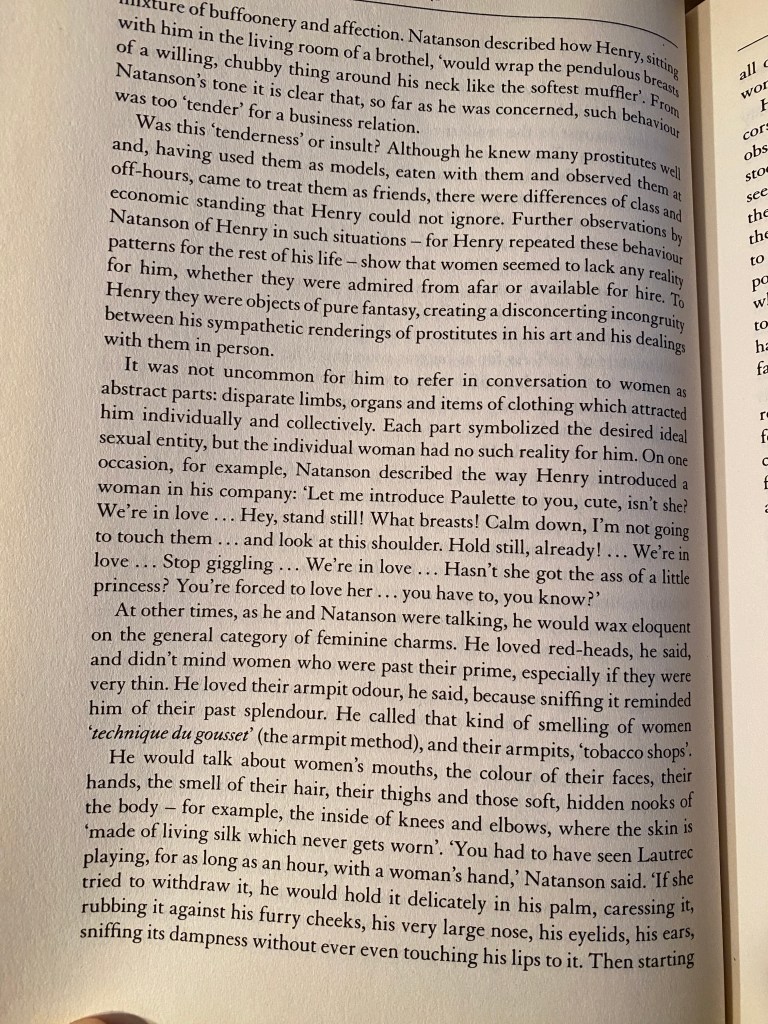
While women would remain a puzzle, he had close male friends especially among those who shared his love of drinking.
Toward the end of his life, he suffered hallucinations consistent with tertiary syphilis. He was committed by his mother for a short period, sobered up, and returned to life briefly before having a series of strokes and passing at age 36. His father renounced any ownership of his work, and his mother and art dealer Maurice Joyant worked in tandem to ensure his work would remain in esteem.