
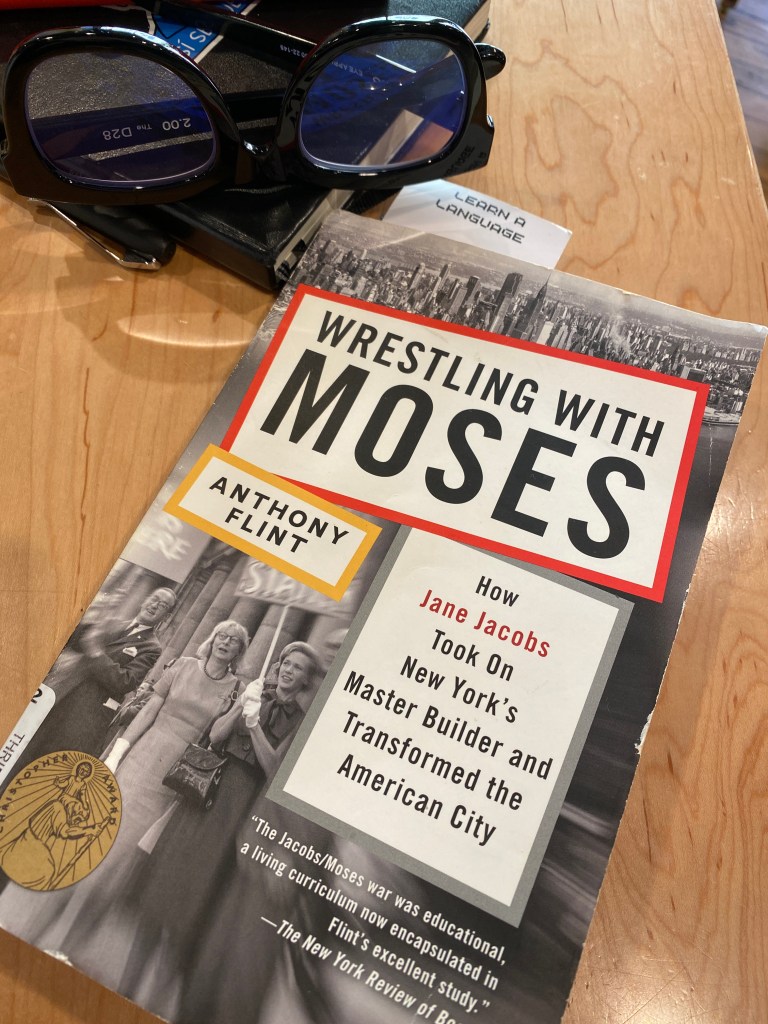
Wrestling with Moses: How Jane Jacobs Took On New York’s Master Builder and Transformed the American City by Anthony Flint
https://www.goodreads.com/book/show/6451819-wrestling-with-moses
In 2024, I attended the Robert Caro exhibit at the NY Historical Society. The Power Broker was already on my bookshelf, and I read with a mix of horror and fascination reader’s tips to finish the four pound book on the subway by cutting it into several sections. I already waded halfway through Jane Jacob’s Death and Life of Great American Cities several years prior, and it felt a bit like work. I’m going to revisit that one soon, so stay tuned. Plus, I’ve already mentioned that I didn’t crack the Power Broker, so you can look at this book as a bit of a consolation prize. Learn the story for the price of a few hours rather than the estimated 21 and go from there.
Caro grew up in Midtown with doting parents and a driver. He was a swimmer and excellent student who nevertheless succumbed to the antisemitism of the day while at Yale. He also abruptly quit the swim team when his ideas for a school fundraiser weren’t implemented. Brilliance and myopia will be continual themes here.
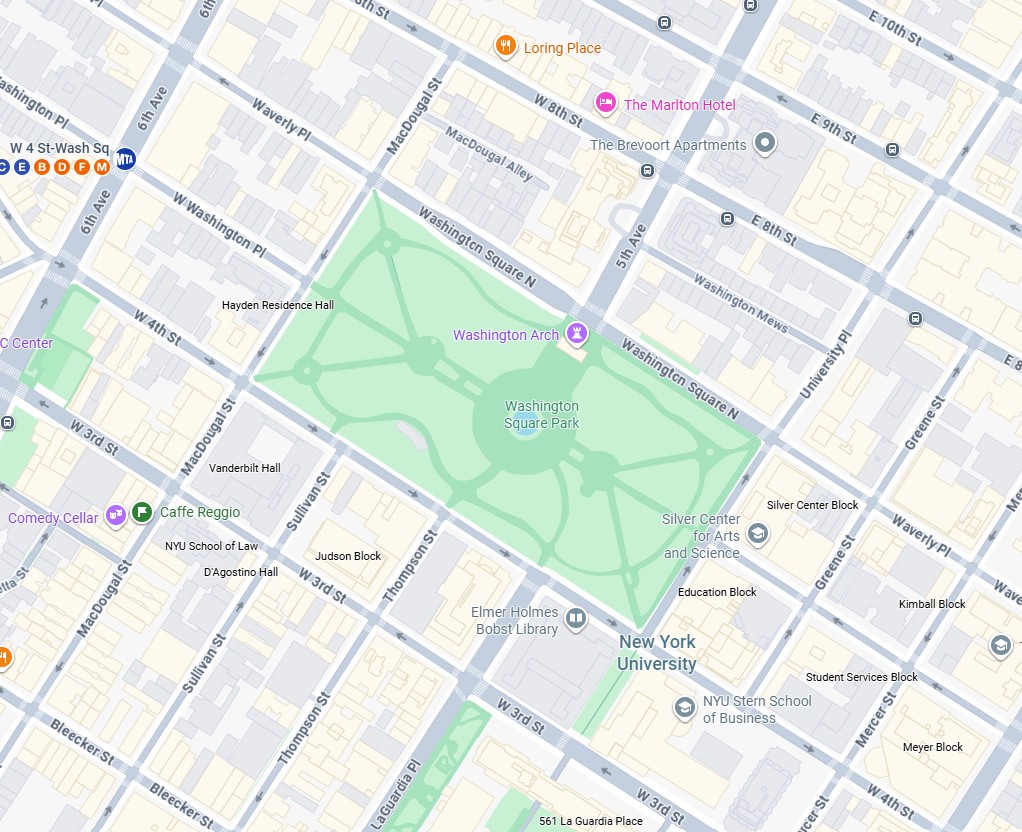
He entered public service at the Municipal Research Bureau before making himself the head of the Triborough Bridge Authority, a post he created to fund and maintain his first enormous pet project, the Triborough Bridge (John F. Kennedy Bridge). At the same time, he built himself an isolated office on Randall Island. Moses’ genius was in finding a niche project and then writing the legislation that others would pass all while giving himself the levers of power necessary to bring that project to fruition with minimal delays and zero public input. Infrastructure projects like the early parks he renovated are very popular, so he amassed great power in the process with the elected officials he served. He crosses paths initially with Jacobs when he proposes a highway through Washington Square Park. A two-lane highway that would go directly through the park’s landmark arch. Yikes.
Born in Scranton, Jane Jacobs matches Moses in both brilliance, tenacity, and stubbornness. She left college while lacking just one class and refused to go back. Later, she would also refuse honorary degrees. However, her intellect and work ethic is without question. She worked at various jobs in private industry and government before landing a position at Architectural Forum and gaining a keen interest in planning that matched her budding interest in the city of New York. Observations, conversations, and study all collide in The Life and Death of Great American Cities, her first and most well known book and a seminal book in urban planning circles.
What Flint brings out is also Jacobs’ strength as an organizer and communicator. She builds consensus in the neighborhood by going door to door and crafts appealing messages for each audience. She’s a real community organizer and gifted speaker. She’s the kind of leader that others want to follow, and they did defeat Moses in this venture and later in his Lower Manhattan Expressway, a highway proposed to loop through lower Manhattan and out to Long Island, an expressway for Jersey.
What was most interesting to me about the book was how Moses viewed NYC in terms of the car and Jacobs in terms of the people affected by the car. New York is always changing, and at the time Moses was building, the car did seem ascendent. His worldview was being reinforced and yet with time, Jacobs’ view would be more in line with the modern mind. The Soho neighborhood Moses would have bulldozed is some of the most enviable real estate in the world, and congestion pricing has reduced traffic in the city to the delight of most residents. Manhattan is a destination and not a throughway to Long Island as Moses envisioned with his last failed push. In addition, Moses’ tactics would become both unpopular and prove cruel with time that current building processes are longer and more in depth possibly to the detriment of affordable housing in already dense places like NYC. With recently passed reforms, maybe we’re looking at a more balanced approach in the future. Nothing is really permanent. Especially not in NYC.
 Cher Time